IIM Lucknow Begins First BS Programme in Artificial Intelligence & Business Analytics

IIM Lucknow Launches First-Ever BS Programme in Artificial Intelligence & Business Analytics

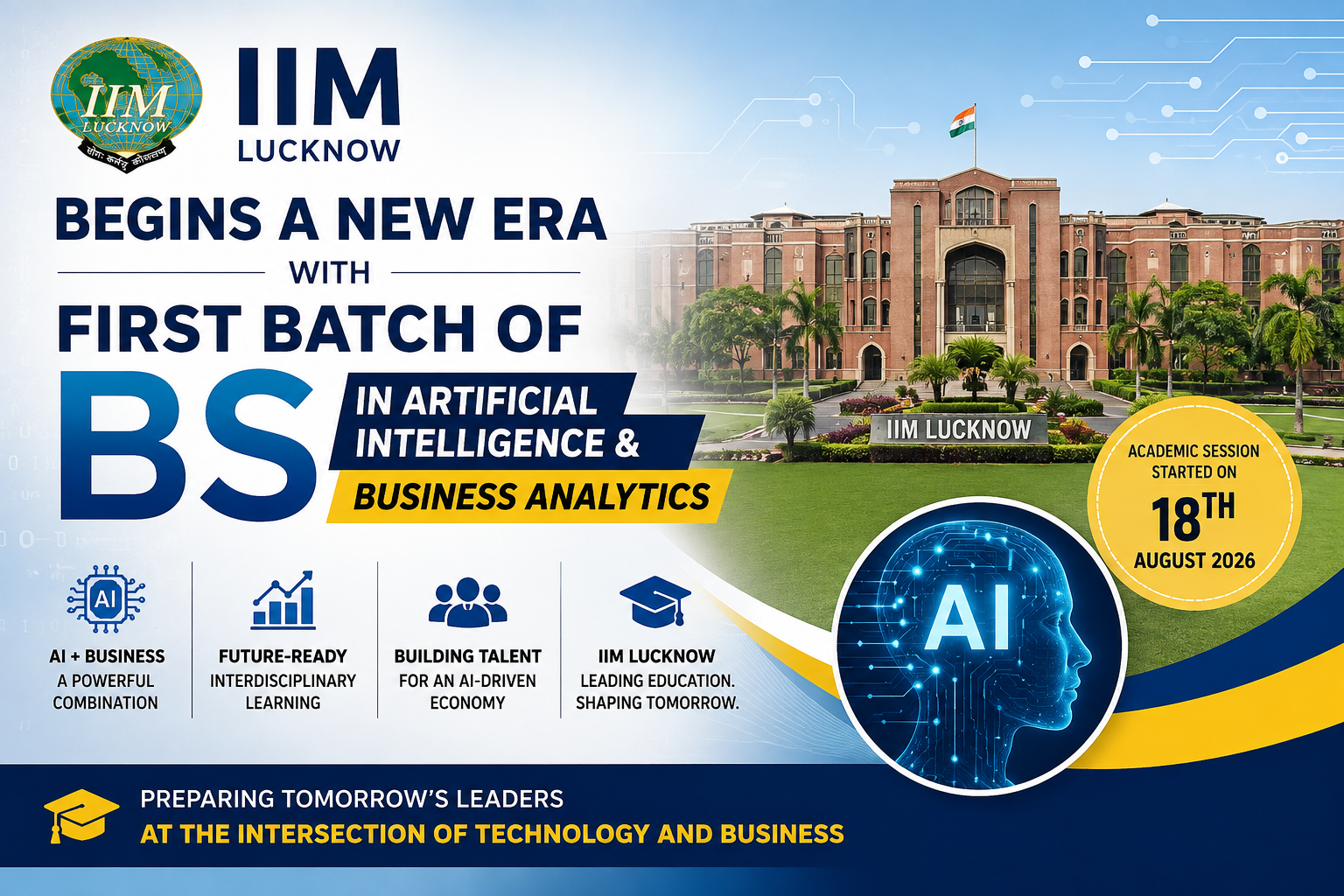
IIM Lucknow has taken a major step into the world of Artificial Intelligence (AI) with the admission of its inaugural batch for the Bachelor of Science (BS) in Artificial Intelligence & Business Analytics programme. The new undergraduate programme marks an important expansion for IIM Lucknow, traditionally known for management education. With AI, data analytics and technology becoming increasingly important across industries, the programme aims to prepare students for careers at the intersection of technology and business.

IIM Lucknow Welcomes Its First AI & Business Analytics Batch

According to a recent Times of India report, IIM Lucknow has admitted its first batch of students to the newly introduced BS programme in
Artificial Intelligence. The academic session began on August 18,2026. The programme is designed to provide students with a combination of technical knowledge, Artificial Intelligence skills, Business Analytics and management education.

What Is the IIM Lucknow BS in AI & Business Analytics Programme?

The BS in Artificial Intelligence & Business Analytics is a four-year undergraduate programme offered by IIM Lucknow.
The programme combines Artificial Intelligence, Machine Learning, Data Engineering, Analytics and responsible AI with business and management education. According to IIM Lucknow, the programme is fully residential and is designed to leverage the technology and startup ecosystem around Lucknow.

What Will Students Learn?

The programme focuses on building a strong foundation in technology and business. Students can develop skills in areas such as:

  1. Artificial Intelligence
  2. Machine Learning
  3. Business Analytics
  4. Data Engineering
  5. Programming
  6. Data-driven Decision Making
  7. Responsible AI
  8. Business and Management

The curriculum is intended to help students understand not only how AI technologies work but also how they can be applied to solve real-world business and organisational problems.

Why IIM Lucknow’s AI Programme Is Important

Artificial Intelligence is transforming almost every major sector, including finance, healthcare, education, manufacturing, retail and governance. Organisations increasingly need professionals who understand both technology and business.
This is where the interdisciplinary approach of IIM Lucknow’s programme can become important. Instead of looking at AI only from a technical perspective, students can learn how AI connects with business strategy, analytics and decision-making.

AI Education Gets a Major Push in Uttar Pradesh

The launch of this programme is also significant for Uttar Pradesh’s growing AI and technology ecosystem.

IIM Lucknow’s official programme information highlights the opportunity to connect the programme with Lucknow’s emerging technology, startup and incubation ecosystem. As Uttar Pradesh continues to focus on technology, digital transformation and AI-led innovation, developing skilled AI professionals within the state could play an important role in supporting startups, businesses, research and technology-driven projects.

What Does This Mean for Students?

For students interested in Artificial Intelligence, the programme provides an opportunity to study AI from a broader perspective. The focus is not limited to coding or machine learning. Students can understand the connection between:

Technology + Data + AI + Business + Strategy

This combination can be valuable as businesses increasingly use AI for automation, forecasting, customer insights, decision-making and other functions.

IIM Lucknow’s Move Reflects a Changing Education Landscape

The launch of the BS in Artificial Intelligence & Business Analytics reflects a wider shift in higher education. Leading educational institutions are increasingly introducing programmes focused on emerging technologies such as Artificial Intelligence, Data Science and Business Analytics. The demand for professionals who can combine technical knowledge with business understanding is also expected to grow as AI becomes more deeply integrated into organisations.

The Future of AI Education in Uttar Pradesh

IIM Lucknow’s first AI-focused undergraduate batch could become an important milestone in the development of AI education in Uttar Pradesh. By bringing Artificial Intelligence and Business Analytics together with its management expertise, IIM Lucknow is creating an interdisciplinary learning environment for students preparing for an AI-driven economy.

The development also highlights a broader message for students and educators: AI education is no longer limited to computer science departments. It is increasingly becoming part of business, management and decision-making
education as well.

Conclusion

The admission of IIM Lucknow’s first batch of students to its BS in Artificial Intelligence & Business Analytics programme marks an important development in India’s AI education landscape. The programme brings together Artificial Intelligence, Business Analytics, technology and management, giving students an opportunity to build skills that are increasingly relevant to the future workplace.

For Uttar Pradesh, the programme also represents another step towards building a stronger talent ecosystem for the AI-driven economy.As Artificial Intelligence continues to reshape industries and careers, initiatives such as this could help prepare the next generation of
professionals for a technology-led future
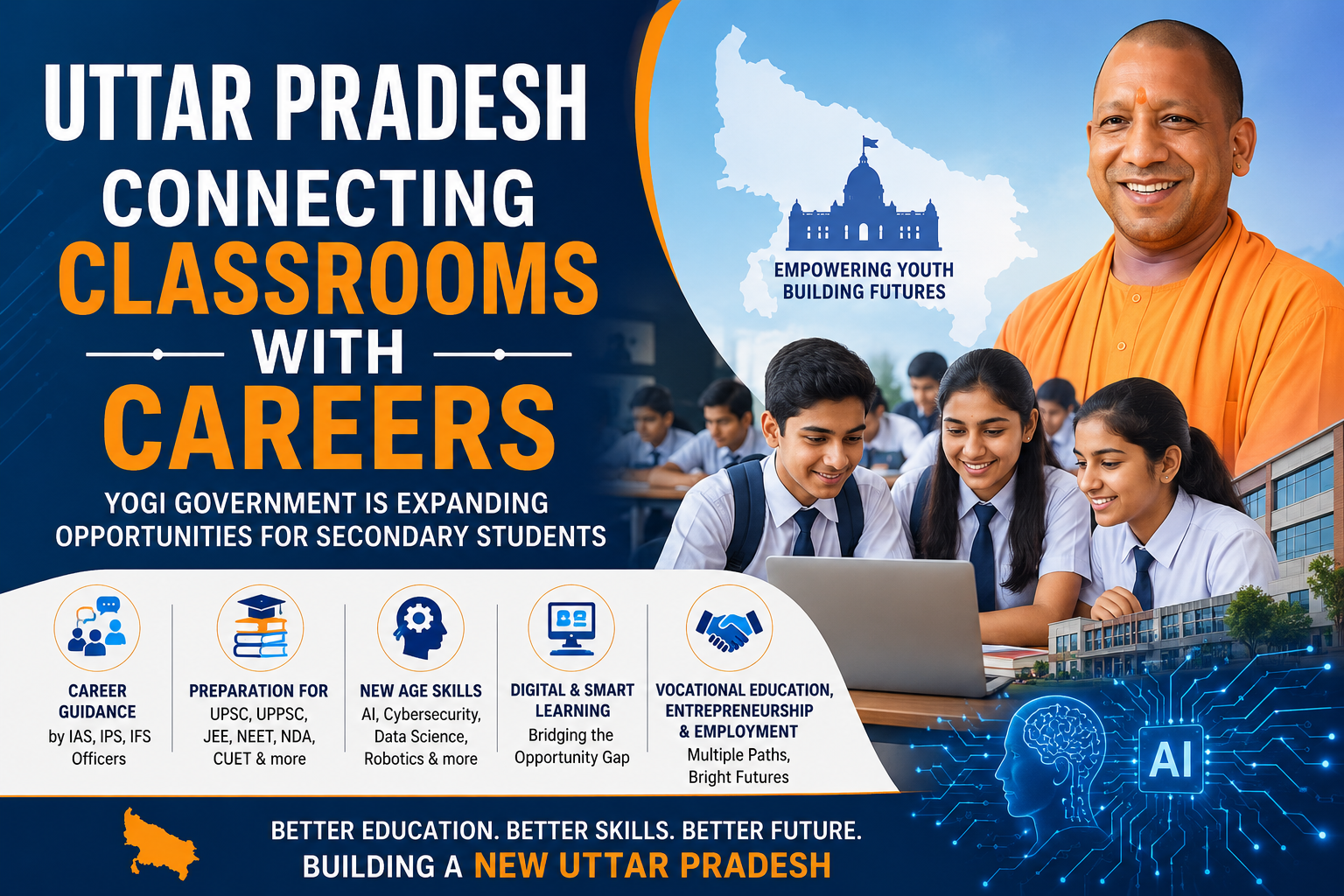


Uttar Pradesh Is Connecting Classrooms With Careers: A New Path for Secondary Students

Education is no longer limited to textbooks, examinations and marks. For students in Classes 9 to 12, school is increasingly becoming the starting point for career planning, skill development and exposure to new opportunities.

The Uttar Pradesh government is placing greater emphasis on helping secondary and intermediate students understand what comes after school — whether that means higher education, competitive examinations, technical training, employment, entrepreneurship or careers in emerging technologies.

From School Lessons to Career Guidance

Classes 9 to 12 are a crucial stage in a student’s life. This is when young people begin choosing academic streams, identifying career interests and thinking about their professional future. To support students during this phase, the Uttar Pradesh government has introduced an initiative under which young IAS, IPS and IFS officers will visit intermediate-level schools and interact directly with
students.

Instead of traditional motivational lectures, these sessions are designed around conversations and question-and-answer interactions. Students can ask officers about competitive examinations, preparation strategies, time management, career choices and professional life.

Exposure to More Than Just Government Jobs

Career guidance under the initiative is not limited to civil services. Students can be introduced to multiple examination and career pathways, including:

  1. UPSC and UPPSC
  2. UPSSSC
  3. JEE and NEET
  4. NDA and defence careers
  5. CUET
  6. Technical and vocational education
  7. Employment opportunities
  8. Startups and entrepreneurship

The broader objective is to help students understand that there are multiple routes to building a zsuccessful career.

AI, Cybersecurity and the Digital Economy

The changing nature of the job market is also influencing what students need to learn. Artificial intelligence, data science, cybersecurity, robotics and other emerging technologies are rapidly changing workplaces. As a result, digital awareness and technology-related skills are becoming increasingly important for young learners.

Uttar Pradesh’s wider education initiatives are incorporating technology-enabled classrooms, ICT infrastructure and new-age courses. Technical institutions are also increasingly introducing areas such as machine learning, data science, Internet of Things, cybersecurity and drone technology. For students, this means career planning can begin much earlier than it did traditionally.

Building Skills Alongside Academic Knowledge

Academic performance remains important, but today’s students need a wider set of abilities.

Students can benefit from developing skills such as:

  1. Communication skills
  2. Financial literacy
  3. Cybersecurity awareness
  4. Confidence building
  5. Self-discipline
  6. Stress management
  7. Business management
  8. Entrepreneurship

These skills can help students become better prepared not only for examinations but also for college,
employment and professional life.

Vocational Education Opens Another Path

Not every student wants to follow the conventional school-college-job route. Uttar Pradesh is also strengthening vocational education for students in Classes 9 to 12 through initiatives designed to introduce practical and industry-relevant skills. Such programmes can help students explore employment, entrepreneurship and technical education while they are still in school.

Digital Learning Can Reduce the Opportunity Gap

Access to technology has the potential to make education more inclusive. Digital learning resources, smart classrooms and ICT facilities can give students in smaller towns and rural areas access to educational material, career information and learning opportunities that were
previously concentrated in larger cities. For Uttar Pradesh, with its large and diverse student population, expanding digital access can play an
important role in creating more equal educational opportunities.

Scholarships and Financial Support Matter Too

Career opportunities are meaningful only when students are able to continue their education. Scholarships and financial assistance programmes can help reduce the economic pressure on families and encourage students to continue their studies after secondary school. Support for students from rural, economically weaker and other disadvantaged backgrounds can make the
transition from school to higher education more accessible.

The Bigger Picture

The direction of Uttar Pradesh’s education strategy is becoming increasingly clear school education is being connected with career development. The focus is expanding from simply helping students pass examinations to helping them understand opportunities, develop practical skills, access technology and make informed decisions about their future. The initiative to bring young civil servants directly into schools adds another important dimension — mentorship. When students can directly interact with professionals who have successfully navigated competitive examinations and demanding careers, they get something that textbooks cannot provide: a real-world
perspective.

What This Means for Students

For a Class 9 student today, the future career journey could include university education, competitive examinations, technical training, AI and technology, vocational skills, entrepreneurship or employment. The important change is that students are being encouraged to explore these possibilities earlier. The classroom is no longer just a place to prepare for the next examination. It can become the first step towards preparing for the future. As Uttar Pradesh continues expanding career counselling, digital education, vocational training, technology exposure and mentorship, the goal is moving towards creating students who are not only academically prepared but also career-ready, digitally aware and confident enough to pursue new opportunities.

Lucknow AI Teams Secure Global Recognition at UiPath AgentHack 2026

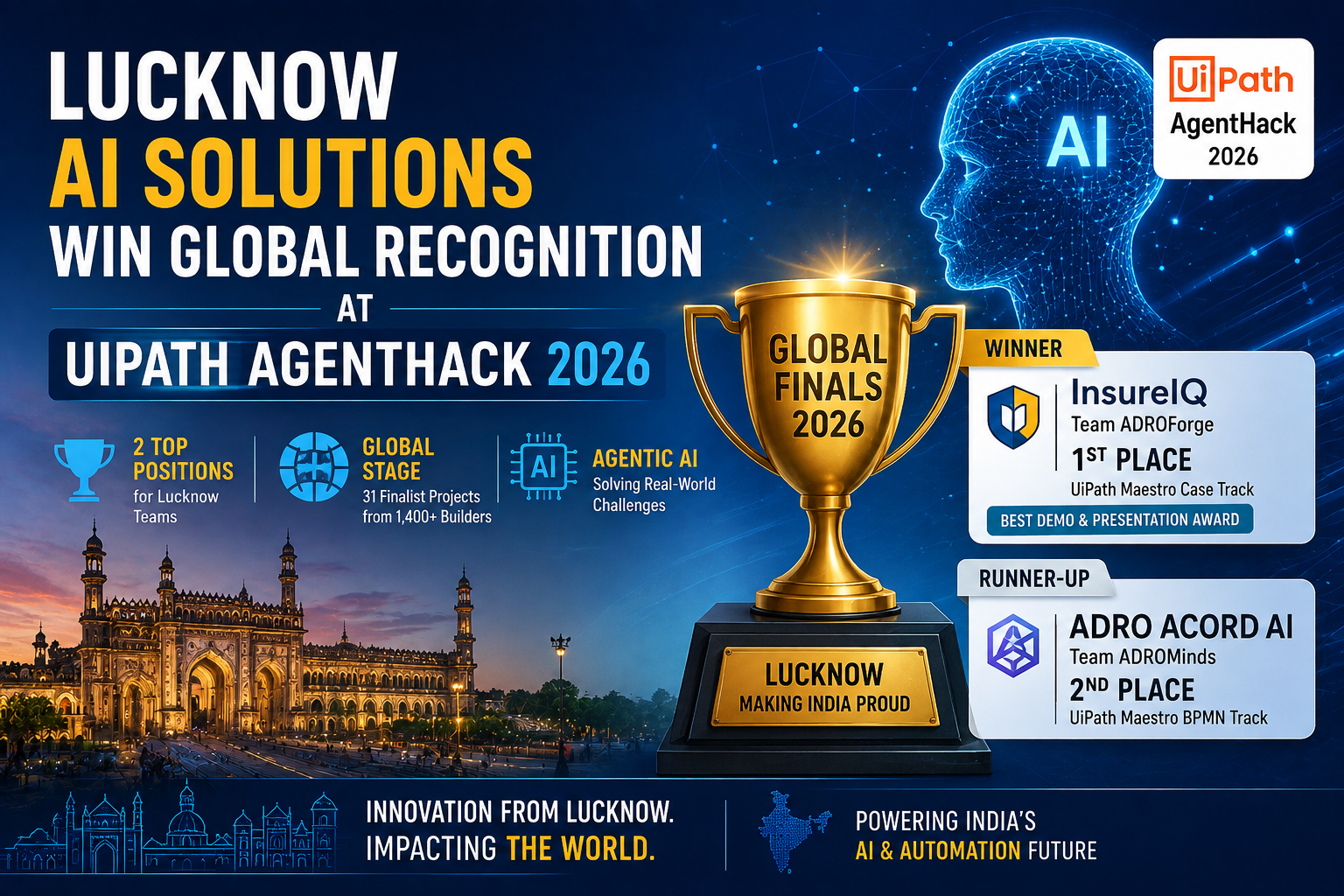
Uttar Pradesh is strengthening its position on the global Artificial Intelligence map as two AI solutions developed by teams at ADROSONIC’s Lucknow Delivery Centre secured top positions at the UiPath AgentHack 2026 Global Finals.

The achievement has brought international attention to the technology talent emerging from Lucknow and highlights the city’s growing potential as a centre for Artificial Intelligence, automation and advanced technology development.

Two Lucknow Teams Finish in Top Positions

The Lucknow-based teams delivered an impressive performance in the global agentic AI competition InsureIQ, developed by Team ADROForge, secured First Place in the UiPath Maestro Case Track and also received the Best Demo & Presentation Award.

Another solution, ADRO ACORD AI, developed by Team ADROMinds, achieved Second Place in the UiPath Maestro BPMN Track.

Both solutions were developed within ADROSONIC’s Intelligent Automation Practice and focus on applying Agentic AI and automation to complex challenges in the insurance industry.

Global Competition Highlights Lucknow’s AI Talent

The UiPath AgentHack 2026 attracted 1,400 builders, with 333 projects submitted during the competition. After the evaluation stages, only 31 projects advanced to the live Global Finals. The success of two teams operating from Lucknow in such a competitive global
environment demonstrates the capabilities of technology professionals working from Uttar Pradesh.

The achievement is particularly significant because India’s technology ecosystem has traditionally been associated with major hubs such as Bengaluru and Hyderabad. The recognition received by Lucknow-based teams indicates that advanced AI engineering and innovation are increasingly emerging from other cities as well.

Agentic AI Driving the Next Wave of Innovation

Unlike conventional automation, Agentic AI focuses on systems that can perform tasks, reason through processes and work with different
applications and tools with greater autonomy.

The solutions developed by the Lucknow teams demonstrate how agentic AI can be applied to real-world business challenges rather than remaining limited to experimental use cases. For industries such as insurance, AI agents can potentially help streamline complex workflows, improve process efficiency and support faster handling of business operations.

Lucknow Emerging as an AI and Technology Hub

The recognition comes at a time when Uttar Pradesh is working towards developing a stronger technology and Artificial Intelligence ecosystem.

The state’s proposed AI City in Lucknow is envisioned as an ecosystem bringing together technology companies, AI and DeepTech
innovation, research institutions, infrastructure, talent development and industry collaboration.

The growth of technology delivery and engineering capabilities in Lucknow could create new opportunities for startups, researchers, students and skilled professionals across the state.

ADROSONIC’s Lucknow Journey

ADROSONIC established its Lucknow Delivery Centre after signing a $4 million Memorandum of Understanding with the Government of Uttar Pradesh during the Uttar Pradesh Global Investors Summit 2023.

Since then, the centre has developed into a technology delivery and engineering hub supporting global clients and working across areas
including Intelligent Automation, Artificial Intelligence and enterprise technologies. The latest AgentHack results provide another example of how technology capabilities developed in Lucknow can compete on international platforms.

What This Means for Uttar Pradesh

The success of the two teams is more than just a competition result. It reflects the growing availability of high-value AI engineering talent
in Uttar Pradesh.

As businesses increasingly adopt AI agents and intelligent automation, cities such as Lucknow could play a larger role in India’s technology
landscape.

For students and young professionals in the state, the development also highlights the growing importance of skills in
Artificial Intelligence, Machine Learning, automation, data science and emerging AI technologies.

The Road Ahead

Lucknow’s performance at the UiPath AgentHack 2026 Global Finals demonstrates that innovative AI solutions can be built from Uttar Pradesh and delivered to global markets.

With continued investment in infrastructure, research, education, talent development and industry partnerships, Lucknow has the potential to strengthen its position as an important AI and Deep Tech hub in India.

The success of Insure IQ and ADRO ACORD AI could therefore be seen as another step towards putting Uttar Pradesh’s growing AI
capabilities on the global technology stage.

Key Takeaway

Two AI solutions built by teams in Lucknow have secured top honours
at the UiPath AgentHack 2026 Global Finals, showcasing the growing
capabilities of Uttar Pradesh’s technology talent and strengthening
Lucknow’s emerging identity as an AI and innovation hub.

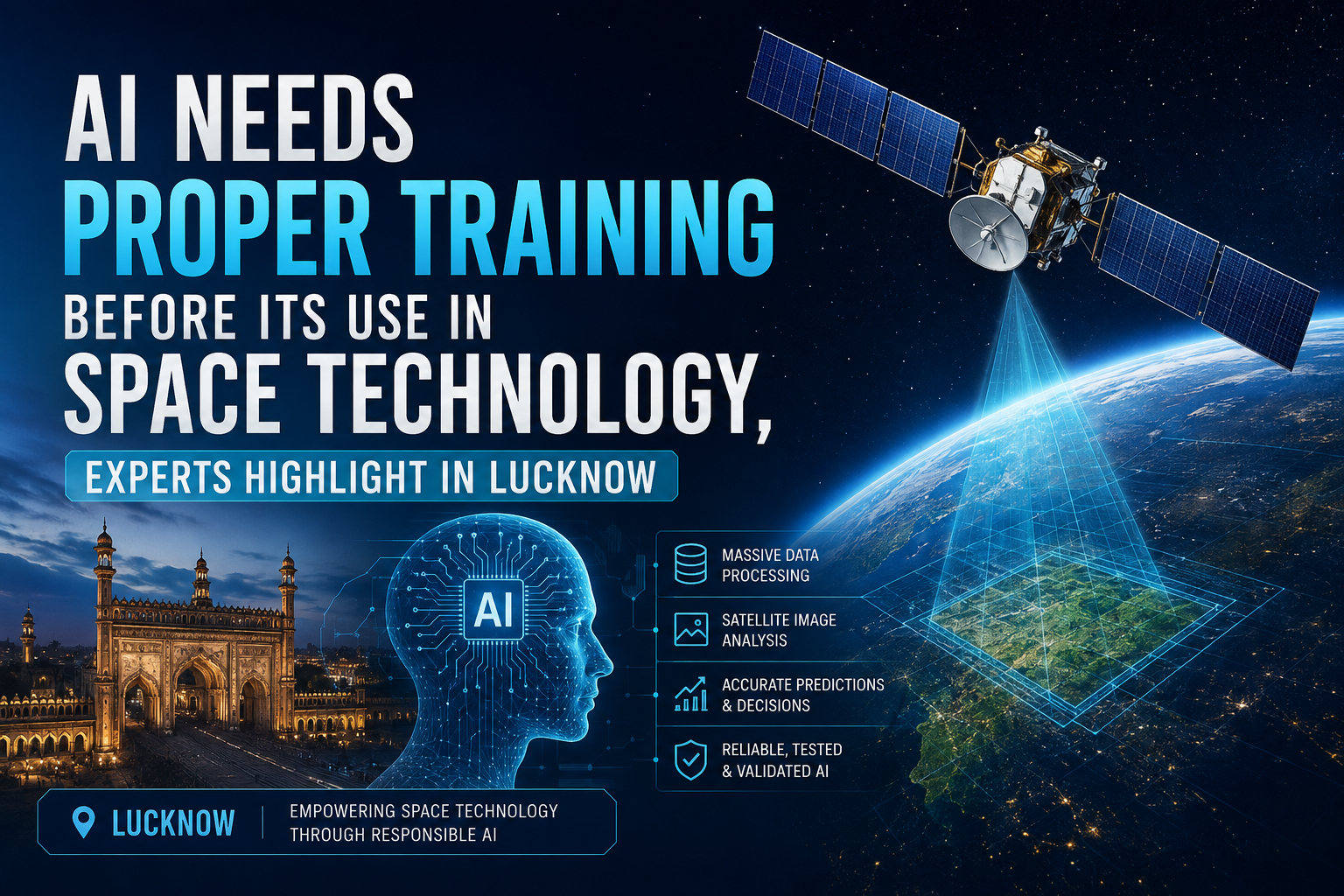
AI Needs Proper Training Before Its Use in Space Technology, Experts Highlight in Lucknow

Artificial Intelligence is rapidly emerging as an important technology for the space sector,
with its ability to process massive volumes of data and support faster decision-making.
However, experts have stressed that AI systems must be properly trained and validated before
they are deployed in critical space-related applications.

The issue was highlighted during a technology-focused discussion in
Lucknow, where experts examined the growing role of Artificial Intelligence
in space technology, satellite systems and remote sensing.

AI Can Help Handle Massive Space Data

Modern satellites generate enormous amounts of information every day. Analysing this data
manually can be time-consuming and requires significant human resources.

AI can help automate several parts of this process by identifying patterns, analysing
satellite imagery and extracting useful information from large datasets.

AI-powered systems could potentially support applications such as:

  1. Satellite image analysis
  2. Remote sensing
  3. Weather and environmental monitoring
  4. Detection of unusual satellite behaviour
  5. Data classification and processing
  6. Mission planning and decision support

By processing information at much greater speed, AI could help researchers and space
professionals make faster and more informed decisions.

Proper Training Is Critical

Despite the growing possibilities, experts have cautioned against using AI systems without
adequate training.

AI models learn from the data provided to them. If that data is incomplete, inaccurate or
poorly structured, the system may produce unreliable results.

This becomes particularly important in space technology, where even a small error can have
significant consequences.

Experts therefore emphasised the need for
high-quality datasets, extensive testing and continuous validation before
AI systems are deployed for critical space applications.

Human Expertise Still Remains Important

The growing use of AI does not mean that human expertise will become unnecessary.

Instead, AI can work alongside scientists, engineers and researchers to improve efficiency
and assist with complex data analysis.

Human oversight can help identify errors, verify AI-generated results and ensure that
decisions involving critical space operations are not based solely on automated systems.

This combination of AI capabilities and human expertise could become an
important part of the future of space technology.

AI and the Future of Remote Sensing

Remote sensing is one area where AI has significant potential.

Satellite images contain valuable information about land, agriculture, climate,
infrastructure and environmental changes. AI can analyse these images and identify patterns
that may be difficult to detect manually.

For a country like India, these capabilities could support applications ranging from
environmental monitoring and disaster management to agricultural planning and urban development.

Why AI Skills Matter for India’s Space Sector

As India’s space ecosystem continues to expand, the demand for professionals with knowledge
of both AI and space technology is also expected to increase.

Students, researchers and technology professionals with skills in machine learning,
data science, computer vision and satellite data analysis could play an important role
in developing the next generation of space applications.

This also creates opportunities for universities and educational institutions to introduce
interdisciplinary programmes that combine artificial intelligence with space science and engineering.

Lucknow’s Growing Technology Ecosystem

The discussion in Lucknow also highlights the city’s growing engagement with emerging technologies.

From Artificial Intelligence and automation to advanced research and digital innovation,
Uttar Pradesh is witnessing increasing interest in technologies that could shape the state’s future economy.

As AI adoption expands across sectors, initiatives involving education, research, startups
and industry collaboration could help Uttar Pradesh develop a stronger technology ecosystem.

The Road Ahead

Artificial Intelligence has the potential to transform the way space data is collected,
processed and interpreted. But its success will depend not only on sophisticated algorithms
but also on accurate data, proper training, rigorous testing and responsible deployment.

Experts believe that AI should be treated as a powerful tool that works alongside human
intelligence rather than as a replacement for it.

With the right approach, AI could contribute significantly to India’s ambitions in space
technology while opening new opportunities for research, innovation and skilled employment.

Key Takeaway

The growing use of AI in space technology presents enormous opportunities, but reliability
must remain a priority. Properly trained AI systems, combined with human expertise and
rigorous validation, could help India unlock the full potential of Artificial Intelligence
in the space sector.

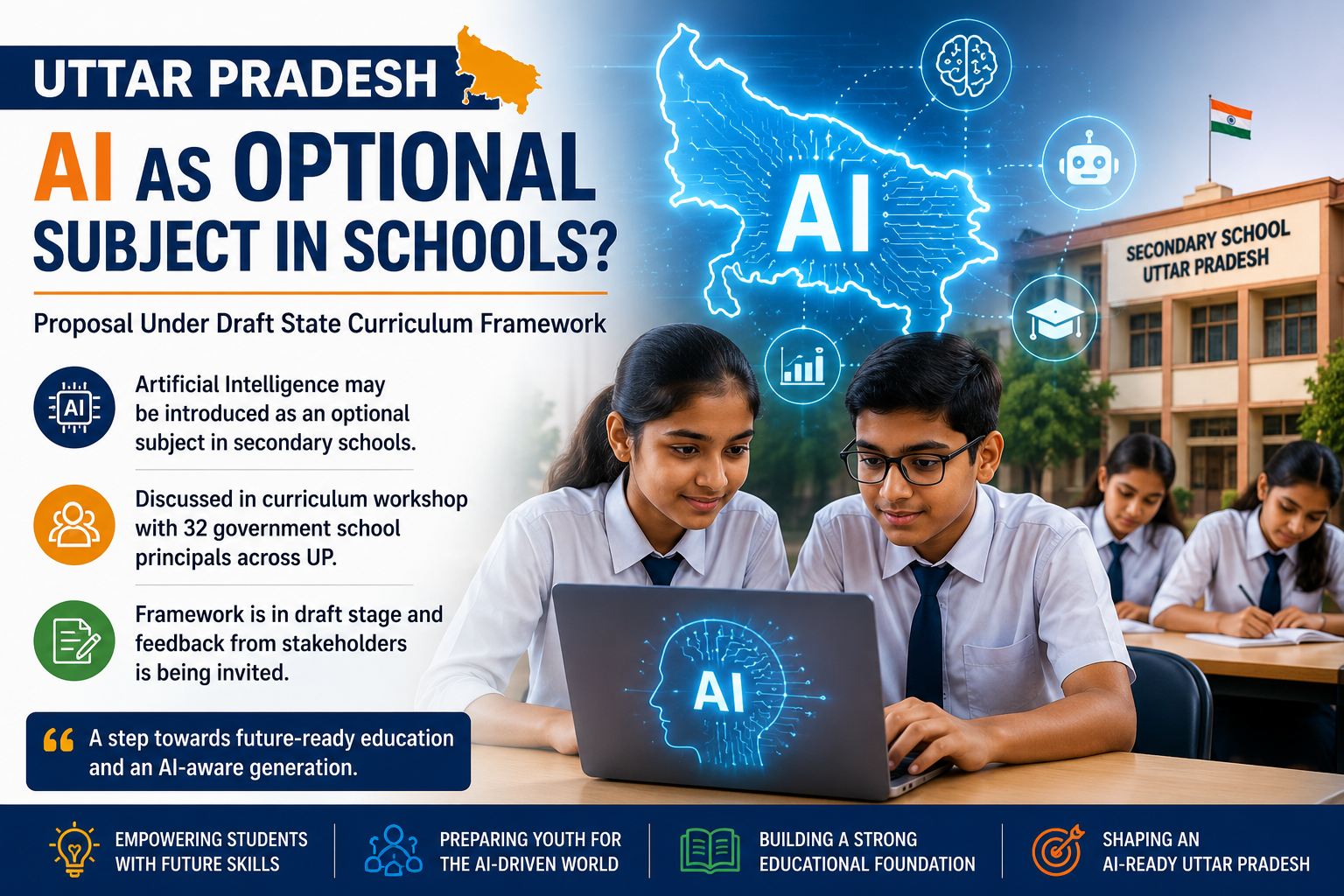
Uttar Pradesh May Introduce Artificial Intelligence as an Optional Subject in Secondary Schools

Uttar Pradesh is considering the introduction of Artificial Intelligence (AI) as an optional subject in secondary schools under a proposed new State Curriculum Framework. The proposal was discussed during the second phase of a curriculum development workshop organised by the Uttar Pradesh Secondary Education Council.

The workshop concluded on August 7, 2026 and brought together 32 government secondary school principals from different districts,
along with education officials. The discussions focused on learning objectives, competencies and the changing educational requirements of secondary school students.

However, the proposed AI subject has not yet been officially introduced in Uttar Pradesh schools. The State Curriculum Framework is currently in the draft stage and is being circulated among education officials and school representatives for feedback and suggestions.

AI Proposed as an Optional Subject

During the curriculum workshop, the Joint Director of Education, Lucknow, suggested that Artificial Intelligence could be considered as an optional subject for secondary school students.

The proposal comes at a time when Artificial Intelligence is becoming increasingly important across education, healthcare, agriculture, manufacturing, business, governance and other sectors.

If the proposal is approved, students could get an opportunity to learn the basic concepts and applications of Artificial Intelligence as part of their optional subjects. The exact structure and content of the subject, however, would depend on the final State Curriculum Framework.

State Curriculum Framework Still Under Development

The proposed AI subject is part of a larger effort to develop a separate secondary education framework for Uttar Pradesh.

The state is working on a curriculum framework that takes into account the specific educational requirements and local context of Uttar Pradesh’s secondary school students.

The draft framework has been circulated for consultation. Government school principals, district school inspectors, regional secretaries and joint directors of education have been invited to provide their comments and recommendations.

The feedback received during this consultation process will help shape the final framework before it is formally implemented.

Why AI Education Could Be Important for Students

Artificial Intelligence is rapidly becoming part of everyday life as well as professional environments. AI-powered technologies are now being explored and adopted across sectors such as education, healthcare, agriculture, finance, manufacturing and public administration.

Introducing AI education at the secondary school level could give students early exposure to an important emerging technology. It could also help them understand how AI works, where it is used and how it may influence future careers.

An optional AI subject could potentially introduce students to areas such as basic AI concepts, digital literacy, responsible use of AI,
problem-solving and emerging technologies.

The exact topics and learning outcomes will depend on the final curriculum if the proposal moves forward.

Focus on Skills Beyond Traditional Academics

The curriculum workshop also included discussions on areas beyond technology. Education officials and school representatives suggested that the new framework should address the wider development of students.

One of the suggestions focused on giving greater importance to the emotional development of students along with academic performance.

Another recommendation highlighted the importance of strengthening students’ communication abilities through facilities such as a language laboratory.

Participants also discussed the importance of helping students understand their surroundings, social environment and responsibilities towards society.

These discussions indicate that the proposed curriculum framework aims to take a broader approach towards secondary education by combining academic learning with technology, communication, emotional development and social awareness.

Preparing Uttar Pradesh Students for the AI Era

The growing adoption of Artificial Intelligence is changing the skills required across industries. Students with an understanding of digital technologies and AI may have better opportunities to adapt to future academic and professional environments.

For Uttar Pradesh, introducing AI as an optional subject could become part of a broader effort to develop a future-ready and digitally skilled generation.

Early exposure to AI can help students become familiar with emerging technologies before they enter higher education or the workforce. It may also encourage students to explore technology-related careers, innovation and entrepreneurship.

AI Proposal Is Still Under Consideration

It is important to note that the proposed AI subject is not yet a confirmed addition to the Uttar Pradesh school curriculum.

The State Curriculum Framework is still being developed, and the proposal is currently part of the consultation process. Feedback from education officials, school principals and other stakeholders will be considered before the framework is finalised.

Therefore, students and parents should currently view Artificial Intelligence as a proposed optional subject rather than a subject that has already been officially introduced across Uttar Pradesh schools.

A Potential Step Towards an AI-Ready Uttar Pradesh

If approved, the inclusion of Artificial Intelligence as an optional subject could mark an important development in Uttar Pradesh’s secondary education system.

The proposal comes at a time when AI literacy is becoming increasingly relevant for students, professionals and businesses. Providing structured exposure to AI at the school level could help young learners understand emerging technologies and prepare for changing career opportunities.

At the same time, the wider curriculum discussions show that Uttar Pradesh is looking beyond technology alone. Emotional development, communication skills, social awareness and the individual needs of students are also being considered.

The proposed State Curriculum Framework could therefore represent a broader shift towards future-ready, skill-oriented and student-focused education in Uttar Pradesh.

For now, the AI subject proposal remains under consideration. The next stage will depend on the feedback received during the consultation process and the finalisation of the State Curriculum Framework.

Uttar Pradesh’s ‘AI for All’ Initiative: 50,000 Students Complete Assessment with 70.41 Average Score

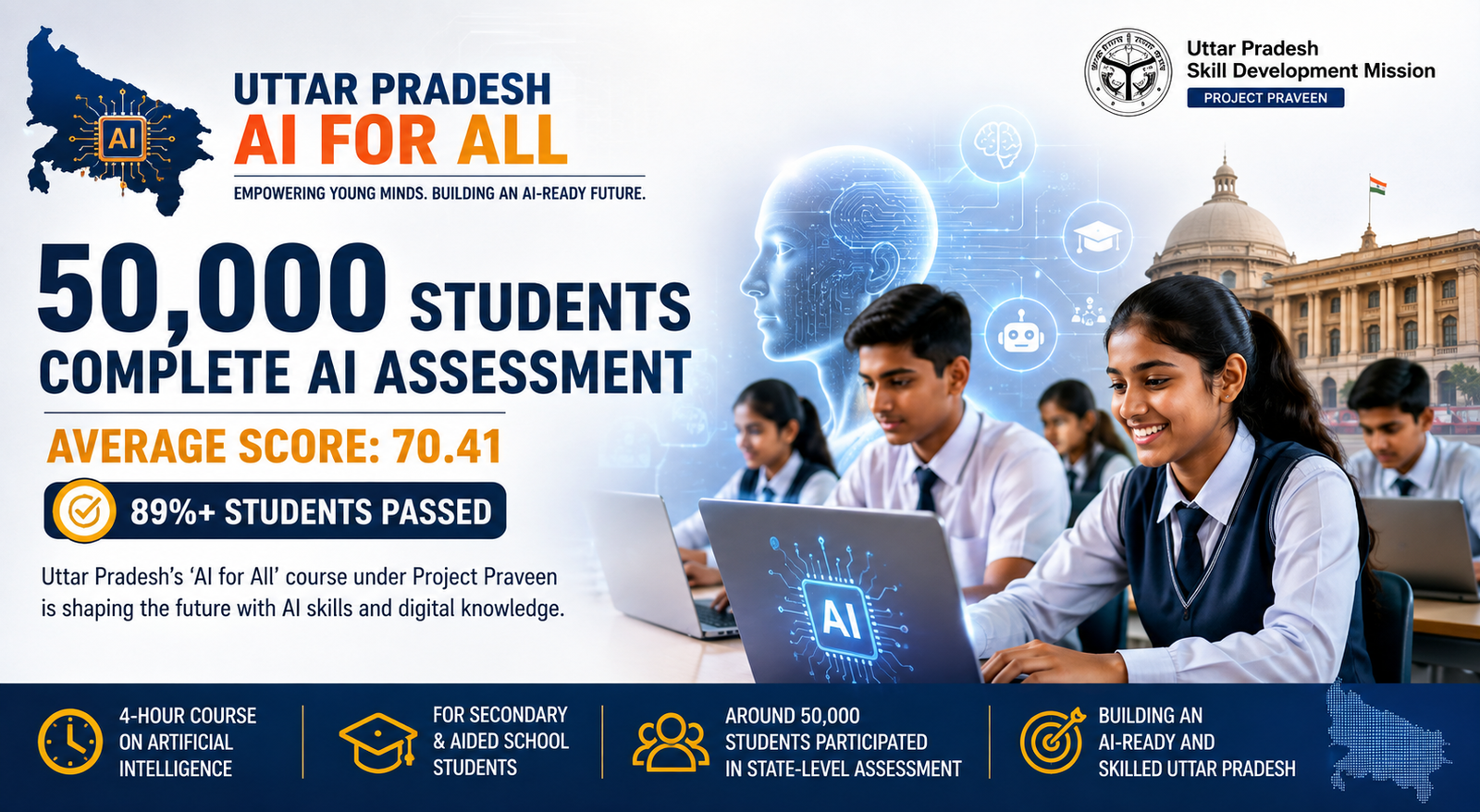
Uttar Pradesh is strengthening its efforts to prepare students for a technology-driven future through its ‘AI for All’ initiative, with around 50,000 students participating in the state-level assessment conducted under the Uttar Pradesh Skill Development Mission.

The initiative is part of Project Praveen, a state government programme focused on equipping students with future-ready skills and improving their exposure to emerging technologies. Artificial Intelligence has become an important part of this effort as the demand for AI-related knowledge and digital skills continues to grow across education, business and employment sectors.

According to the assessment results, participating students achieved an average score of 70.41 out of 100, while more than 89% of students successfully cleared the examination. The results indicate strong participation and growing interest among students in learning about Artificial Intelligence and other emerging technologies.

AI Education at the School Level

The ‘AI for All’ course has been designed as a short, four-hour learning programme aimed at introducing students to the fundamentals of Artificial Intelligence. The programme is being implemented among students in secondary and aided schools across Uttar Pradesh.

Introducing AI concepts at the school level can help students develop an early understanding of technologies that are increasingly influencing different areas of life and work. Instead of limiting technology education to higher education institutions, initiatives like this can give students an opportunity to become familiar with emerging technologies much earlier.

The programme also forms part of the state’s wider focus on strengthening digital literacy and developing skills that can support students as they move towards higher education and employment.

More Than 89% Students Clear the Assessment

The assessment received participation from approximately 50,000 students. More than 89% of those who appeared for the examination successfully cleared it, with the overall average score reaching 70.41.

The examination process was carried out across the state, with question papers distributed to districts before the assessment. The exercise was conducted as part of the government’s efforts to evaluate how effectively students were able to understand the concepts covered under the AI course.

The performance of students provides an early indication of the interest and engagement surrounding AI-focused
learning programmes in Uttar Pradesh.

Focus on Reducing the Digital Divide

One of the key objectives of the initiative is to make technology-based learning more accessible to students across different parts of the state.

Uttar Pradesh’s Skill Development and Vocational Education authorities have highlighted the importance of reducing the gap between students in rural and urban areas. Providing access to AI and digital learning opportunities can help students from different backgrounds gain exposure to the same emerging technologies.

This approach is particularly relevant as Artificial Intelligence becomes increasingly connected with education, healthcare, business, manufacturing, governance and other sectors.

Preparing Students for the AI Era

The growing adoption of AI is changing the skills that employers and industries are likely to require in the future. Students who understand basic AI concepts, digital tools and emerging technologies may be better positioned to adapt to these changes.

Through Project Praveen and the ‘AI for All’ course, Uttar Pradesh is
attempting to introduce this learning at an early stage. The initiative focuses not only on academic knowledge but also on developing awareness of technologies that could influence future careers. For students, early exposure to AI can help them understand how technologies such as machine learning, automation and intelligent digital tools are being used in the real world.

A Step Towards an AI-Ready Uttar Pradesh

The participation of nearly 50,000 students in the ‘AI for All’ assessment marks an important step in Uttar Pradesh’s ongoing digital-skilling efforts. With more than 89% of students clearing the assessment and an average score of 70.41, the initiative has shown encouraging initial results.

As Artificial Intelligence continues to reshape industries and workplaces, building technology awareness among young people will become increasingly important. Programmes that introduce students to AI at the school level can play a significant role in creating a workforce that is more comfortable with emerging technologies.

Uttar Pradesh’s ‘AI for All’ initiative therefore represents more than a single training programme. It reflects a broader effort to build digital awareness, future-ready skills and AI literacy among the state’s young population. With continued investment in technology education and skill development, such initiatives could contribute to creating a stronger and more AI-ready talent pool in Uttar Pradesh in the coming years.

Uttar Pradesh’s AI Workforce Mission: Skilling, Innovation and Entrepreneurship

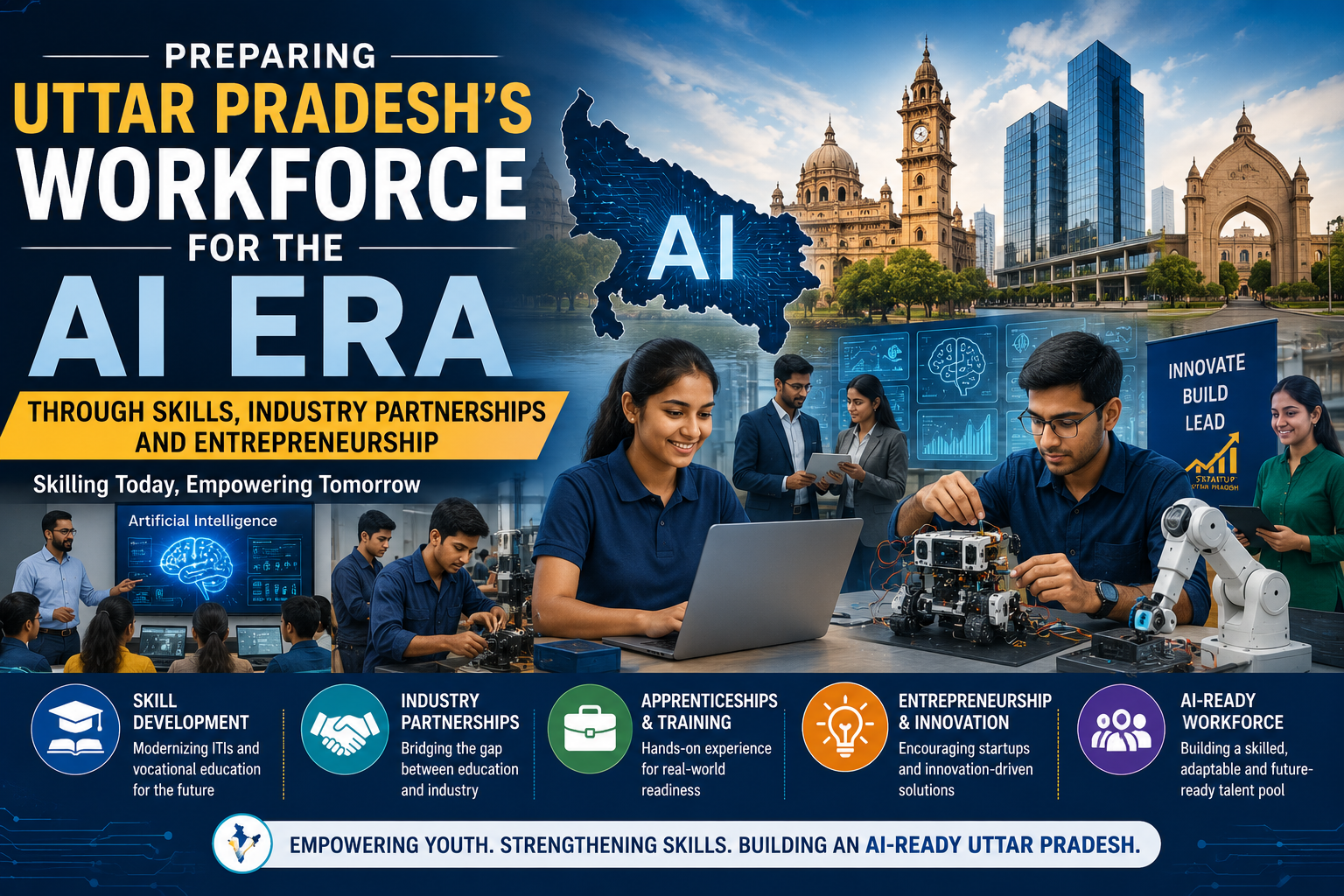
Preparing Uttar Pradesh’s Workforce for the AI Era Through Skills, Industry Partnerships, and Entrepreneurship

Artificial Intelligence (AI) is transforming industries across the world, creating new opportunities while changing the skills required for future jobs. Recognizing this shift, Uttar Pradesh is taking significant steps to prepare its workforce for the AI-driven economy. Instead of focusing only on technology adoption, the state is strengthening vocational education, promoting industry partnerships, expanding apprenticeships, and encouraging entrepreneurship to build a future-ready workforce.

As industries increasingly adopt AI, automation, and digital technologies, the demand for skilled professionals is rising rapidly. Uttar Pradesh’s strategy aims to equip students, young professionals, and entrepreneurs with the practical knowledge and technical expertise required to succeed in the evolving digital economy.

Why AI Skills Matter for Uttar Pradesh

Artificial Intelligence is reshaping almost every sector, including healthcare, agriculture, education, manufacturing, logistics, governance, and finance. To remain competitive, the workforce must continuously upgrade its skills.

With one of India’s largest youth populations, Uttar Pradesh has a unique opportunity to become a leading contributor to the country’s AI ecosystem. By investing in AI education and digital skills, the state is preparing its youth for high-demand careers while supporting economic growth and technological innovation.

Strengthening Vocational Education

One of the biggest priorities is strengthening vocational education and skill development. Uttar Pradesh already has one of the largest vocational training ecosystems in the country, consisting of hundreds of Government Industrial Training Institutes (ITIs), thousands of private ITIs, and the Uttar Pradesh Skill Development Mission (UPSDM).

These institutions provide technical and vocational education to lakhs of students every year. The government now plans to modernize these training centres by introducing Artificial Intelligence, digital technologies, automation, robotics, and industry-oriented curriculum that matches the needs of future employers.

Industry Partnerships to Bridge the Skill Gap

A major challenge for graduates is the gap between classroom education and industry requirements. Uttar Pradesh is addressing this issue by strengthening partnerships between educational institutions and industries.

Through internships, apprenticeships, live projects, industrial visits, and practical training, students gain real-world experience before entering the workforce. These collaborations ensure that graduates possess both theoretical knowledge and practical skills that employers are looking for.

Encouraging Entrepreneurship and Innovation

The AI revolution is creating opportunities not only for job seekers but also for entrepreneurs. Uttar Pradesh is encouraging young innovators to develop AI-powered startups capable of solving real-world problems in sectors such as healthcare, education, agriculture, manufacturing, governance, and financial services.

Startup incubation centres, mentorship programs, funding opportunities, and innovation-friendly government policies are helping young entrepreneurs transform their ideas into successful businesses.

Future Skills for the AI Economy

Future careers will require much more than technical expertise. Employers are increasingly looking for candidates who possess problem-solving abilities, communication skills, creativity, adaptability, teamwork, and digital literacy.

To prepare students for these evolving requirements, Uttar Pradesh is promoting training in:

  1. Artificial Intelligence (AI)
  2. Machine Learning
  3. Data Analytics
  4. Cybersecurity
  5. Cloud Computing
  6. Robotics
  7. Internet of Things (IoT)
  8. Automation Technologies

These future-ready skills will help young professionals remain competitive in rapidly changing industries.

Building an Inclusive AI Workforce

The government’s strategy also focuses on ensuring that AI-driven growth benefits both urban and rural communities. By expanding access to vocational education and digital training across districts, more students will have opportunities to develop industry-relevant skills regardless of their location.

This inclusive approach will improve employability, strengthen local industries, reduce unemployment, and contribute to sustainable economic development throughout the state.

Uttar Pradesh’s Vision for an AI-Ready Future

Preparing a workforce for the AI era requires collaboration between government, educational institutions, industries, startups, and entrepreneurs. Uttar Pradesh is creating an ecosystem where technology, innovation, and skill development work together to support long-term economic growth.

With stronger vocational education, practical industry exposure, entrepreneurship support, and AI-focused learning, the state is positioning itself as one of India’s emerging leaders in digital transformation.

Artificial Intelligence is redefining the future of work, and Uttar Pradesh is proactively preparing its workforce for this transformation. Through investments in vocational education, industry partnerships, apprenticeships, entrepreneurship, and digital skills, the state is building a future-ready talent pool capable of driving innovation and economic growth.

As these initiatives continue to expand, Uttar Pradesh is expected to become a major hub for AI talent, technology startups, and digital innovation, contributing significantly to India’s vision of becoming a global leader in Artificial Intelligence.

Uttar Pradesh Cabinet Approves Deep-Tech U-Hubs in Lucknow & Noida to Boost AI Innovation

Uttar Pradesh Cabinet Approves Deep-Tech U-Hubs in Lucknow and Noida: A Major Boost for AI and Innovation

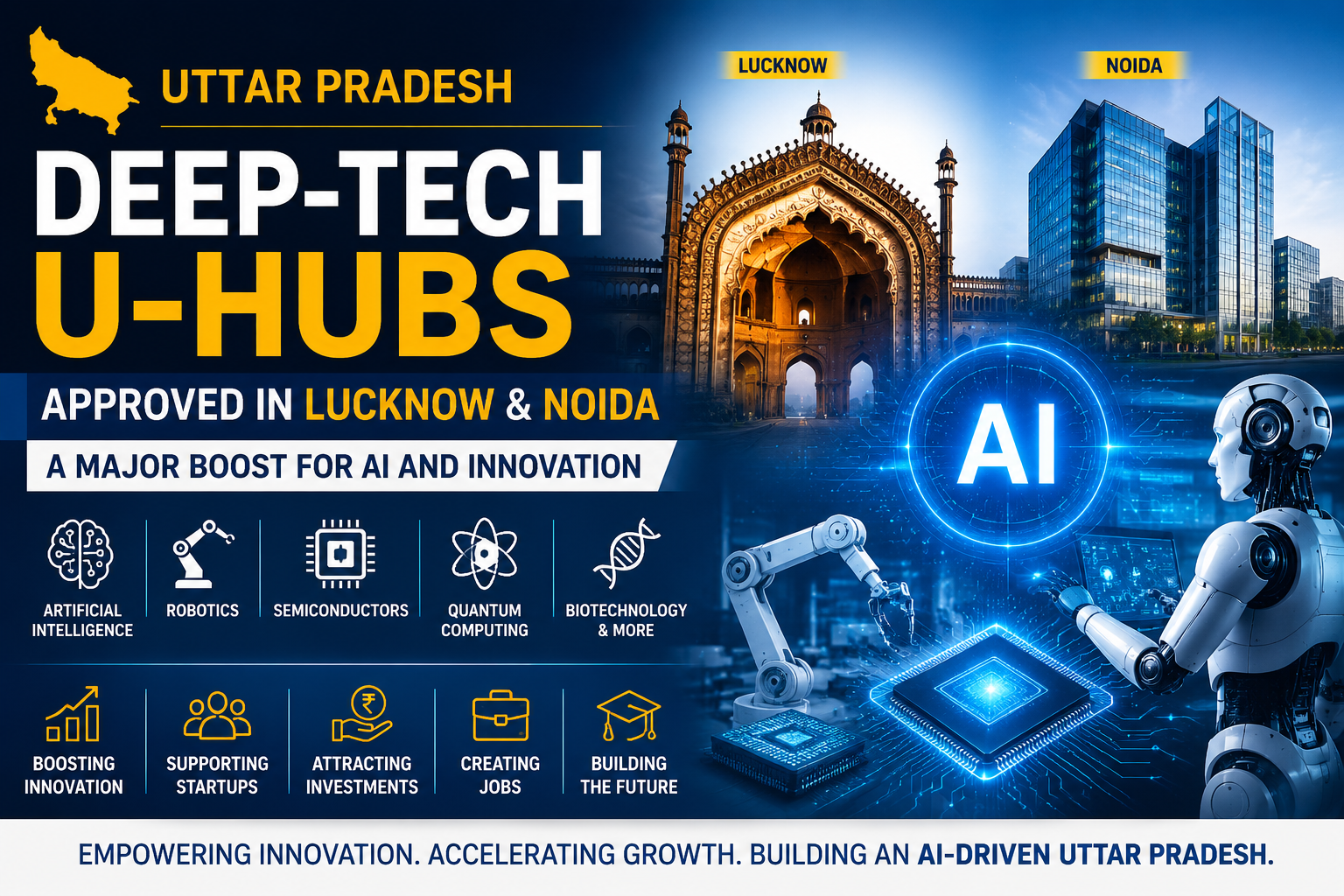
Uttar Pradesh has taken another significant step towards becoming one of India’s leading technology-driven states. In a landmark decision, the Uttar Pradesh Cabinet has approved the establishment of Deep-Tech Innovation Centres (U-Hubs) in Lucknow and Noida. The initiative aims to strengthen the state’s innovation ecosystem by promoting emerging technologies such as Artificial Intelligence (AI), robotics, quantum computing, semiconductors, biotechnology, and advanced computing.

The approval of these U-Hubs reflects the government’s long-term vision of creating an environment where startups, researchers, universities, industries, and investors can work together to accelerate innovation and develop world-class technologies. The project is expected to play a major role in transforming Uttar Pradesh into one of India’s fastest-growing deep-tech destinations.

What Are Deep-Tech U-Hubs?

Deep-Tech U-Hubs are specialized innovation centres designed to support startups and researchers working on advanced technologies that require extensive research, scientific expertise, and high-end infrastructure. Unlike traditional startup incubators, these hubs focus on solving complex technological challenges while encouraging long-term innovation.

The centres will provide modern infrastructure, research facilities, incubation support, mentorship, funding opportunities, networking events, and collaboration with leading academic institutions and industries. These resources will enable startups to transform innovative ideas into commercially successful products and services.

Key Technologies the U-Hubs Will Focus On

The newly approved U-Hubs will focus on several next-generation technologies that are expected to shape the future economy.

  1. Artificial Intelligence (AI)
  2. Machine Learning
  3. Quantum Computing
  4. Robotics & Automation
  5. Semiconductor Design & Manufacturing
  6. Biotechnology
  7. Advanced Computing
  8. Physical AI
  9. Defence Technologies
  10. Smart Manufacturing

These technologies have enormous potential across healthcare, education, agriculture, manufacturing, finance, governance, transportation, and smart cities.

Why Lucknow and Noida Were Chosen

Lucknow and Noida are already emerging as important centres for education, technology, and industrial development. Noida has become a major IT and electronics manufacturing hub, while Lucknow is rapidly growing as an innovation and administrative centre.

By establishing Deep-Tech U-Hubs in these two cities, the government aims to create regional innovation clusters that connect startups, universities, research institutes, investors, and global technology companies.

Benefits for Startups and Entrepreneurs

The Deep-Tech U-Hubs will create numerous opportunities for startups and entrepreneurs across Uttar Pradesh.

  1. Access to advanced laboratories and research facilities.
  2. Mentorship from industry experts.
  3. Funding and investment support.
  4. Business incubation and acceleration programs.
  5. Collaboration with universities and research organizations.
  6. Networking opportunities with global technology companies.
  7. Support for patent filing and commercialization.

These initiatives will significantly reduce barriers for deep-tech startups and encourage more entrepreneurs to build innovative solutions within Uttar Pradesh.

How This Initiative Will Strengthen AI in Uttar Pradesh

Artificial Intelligence is becoming one of the most transformative technologies globally. By investing in AI-focused innovation centres, Uttar Pradesh is preparing itself for the next phase of digital transformation.

The U-Hubs will help develop AI-based solutions for governance, healthcare, agriculture, education, transportation, manufacturing, and public services. They will also encourage AI research, skill development, and collaboration between academia and industry.

This initiative is expected to create thousands of high-skilled employment opportunities while attracting both domestic and international investments into the state’s technology sector.

Strengthening Uttar Pradesh’s Startup Ecosystem

Over the last few years, Uttar Pradesh has launched several initiatives to promote startups, electronics manufacturing, data centres, semiconductor investments, and digital infrastructure. The approval of Deep-Tech U-Hubs adds another important milestone to the state’s innovation journey.

The centres will provide startups with the support needed to compete globally while contributing to India’s vision of becoming a leader in emerging technologies.

Future Impact on the State Economy

The establishment of Deep-Tech U-Hubs is expected to strengthen Uttar Pradesh’s knowledge economy by promoting research, entrepreneurship, technology commercialization, and high-value employment. As more startups emerge and innovative products reach global markets, the state’s economy is likely to benefit through increased investment, exports, and job creation.

The initiative also aligns with India’s larger mission of becoming a global hub for Artificial Intelligence, semiconductor manufacturing, and advanced technology development.

The Uttar Pradesh Cabinet’s approval of Deep-Tech U-Hubs in Lucknow and Noida marks a transformative step toward building a future-ready innovation ecosystem. By focusing on Artificial Intelligence, robotics, quantum computing, semiconductors, and other cutting-edge technologies, the state is creating a strong foundation for startups, researchers, and entrepreneurs.

As these centres become operational, they are expected to accelerate innovation, generate high-quality employment, attract global investments, and position Uttar Pradesh as one of India’s leading destinations for deep-tech research and AI-driven development. The initiative is not just an investment in technology—it is an investment in the future of Uttar Pradesh’s economy and its next generation of innovators.

How Uttar Pradesh Is Preparing Its Workforce for the AI Era Through Skills & Industry Partnerships

As Artificial Intelligence (AI) continues to reshape industries across the world, Uttar Pradesh is preparing its youth for the future by strengthening skill development, vocational education, industry partnerships, and entrepreneurship. The state aims to build an AI-ready workforce capable of meeting the growing demand for digital and emerging technologies while creating better employment opportunities for millions of young people.

A Vision for an AI-Ready Workforce

Rather than focusing only on Artificial Intelligence as a technology, Uttar Pradesh is working towards building a complete ecosystem where education, industry, innovation, and entrepreneurship grow together. The goal is to ensure that students gain practical skills required by modern industries while supporting long-term economic development.

Strengthening Vocational Education

Vocational education remains one of the biggest strengths of Uttar Pradesh’s skill ecosystem. The state has an extensive network of Government and Private Industrial Training Institutes (ITIs) along with the Uttar Pradesh Skill Development Mission, which together train nearly one million young people every year. These institutions are gradually introducing modern technologies alongside traditional technical courses.

Industry Partnerships Are the Key

Experts believe classroom education alone is no longer enough. Strong collaboration between educational institutions, industries, startups, and government departments will help students gain practical experience through internships, apprenticeships, and real-world projects before entering the workforce.

Emerging Technologies Creating New Careers

As industries evolve, the demand for professionals with skills in Artificial Intelligence, Robotics, Electric Vehicles (EV), Drones, CNC machining, Cloud Computing, and Data Science continues to increase. Uttar Pradesh is modernizing its training ecosystem so that students can prepare for these future careers.

Supporting Entrepreneurship and Innovation

Apart from employment, the state is encouraging young entrepreneurs to develop AI-driven startups and innovative business ideas. Startup support, innovation ecosystems, and collaboration with technology companies are expected to create new business opportunities while strengthening Uttar Pradesh’s digital economy.

Benefits Across Multiple Sectors

Education

AI-powered learning platforms, smart classrooms, and personalized education can improve learning outcomes while making education more accessible.

Healthcare

AI can assist doctors through predictive healthcare, faster diagnosis, medical imaging, and telemedicine services.

Agriculture

Smart farming, weather forecasting, crop monitoring, and precision agriculture can improve farm productivity and reduce costs.

Manufacturing

Industries can use AI for automation, predictive maintenance, quality inspection, and efficient production systems.

Future Opportunities for Young Professionals

With increasing investments in Artificial Intelligence and digital infrastructure, students equipped with AI skills will have better employment opportunities in technology companies, manufacturing, healthcare, financial services, and government sectors. Uttar Pradesh’s focus on future-ready skills is expected to strengthen both employability and entrepreneurship.

Conclusion

Uttar Pradesh is moving beyond traditional skill development by preparing its workforce for the Artificial Intelligence era. Through modern vocational education, stronger industry partnerships, AI-focused training, and startup support, the state is creating a foundation for sustainable economic growth. These initiatives will not only generate employment but also help Uttar Pradesh become one of India’s leading centres for AI innovation and digital transformation.

Uttar Pradesh Aims to Become an AI Hub: CII AI Tech Summit 2026 Brings Together Policymakers and Industry Leaders

Uttar Pradesh Aims to Become an AI Hub: CII AI Tech Summit 2026

Published: August 5, 2026

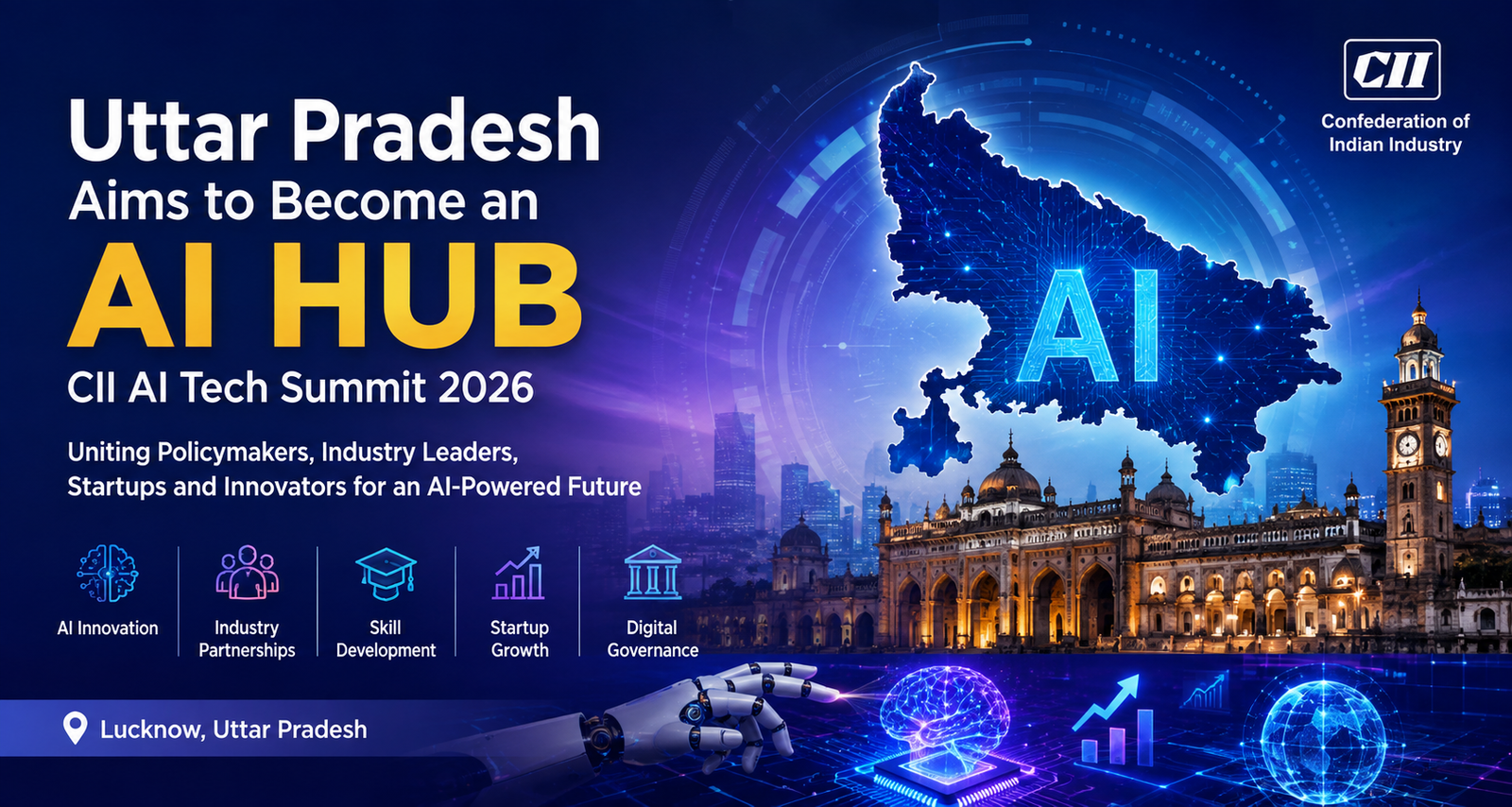
Uttar Pradesh is rapidly positioning itself as one of India’s emerging Artificial Intelligence (AI) destinations. At the CII Uttar Pradesh AI Tech Summit 2026, policymakers, technology leaders, startups, investors, and academic experts came together to discuss how AI can drive innovation, improve governance, strengthen industries, and create future-ready employment opportunities across the state.

Uttar Pradesh’s Vision for an AI-Powered Future

The summit showcased the state’s commitment to building a robust AI ecosystem by encouraging collaboration between government departments, private industries, educational institutions, and startups. The objective is to make Uttar Pradesh a preferred destination for AI innovation, investment, and digital transformation.

Key Highlights of the AI Summit

  1. Promotion of Artificial Intelligence across multiple sectors.
  2. Development of AI-ready talent and digital skills.
  3. Support for startups and innovation.
  4. Industry-academia collaboration.
  5. Encouraging responsible and ethical AI adoption.

How AI Can Transform Different Sectors

Healthcare

Artificial Intelligence can improve healthcare through early disease detection, medical imaging, predictive analytics, telemedicine, and smarter patient care systems.

Education

AI-powered learning platforms, smart classrooms, automated assessments, and personalized education can improve learning outcomes for students across Uttar Pradesh.

Agriculture

AI can assist farmers through crop monitoring, weather forecasting, precision farming, and intelligent irrigation systems, helping improve productivity and reduce costs.

Manufacturing

Manufacturing industries can leverage AI for automation, predictive maintenance, quality inspection, and improved production efficiency.

Digital Governance

AI has the potential to improve public service delivery, automate administrative processes, strengthen grievance redressal systems, and support data-driven policymaking.

Building a Strong AI Ecosystem

Industry leaders emphasized the importance of partnerships between government bodies, universities, startups, and technology companies. Such collaboration can promote research, innovation, skill development, and practical learning opportunities while preparing students for future careers in Artificial Intelligence.

Opportunities for Youth and Startups

As AI adoption continues to grow, Uttar Pradesh aims to create new opportunities for students, entrepreneurs, and technology startups. Skills in Machine Learning, Data Science, Robotics, Cloud Computing, and Cybersecurity are expected to remain in high demand over the coming years.

Conclusion

The CII Uttar Pradesh AI Tech Summit 2026 marks another important milestone in the state’s digital journey. By encouraging AI innovation, industry partnerships, startup growth, and workforce development, Uttar Pradesh is steadily moving towards becoming one of India’s leading AI hubs. These initiatives are expected to strengthen the state’s economy while preparing its citizens for the future of work in the AI era.