Uttar Pradesh May Introduce Artificial Intelligence as an Optional Subject in Secondary Schools
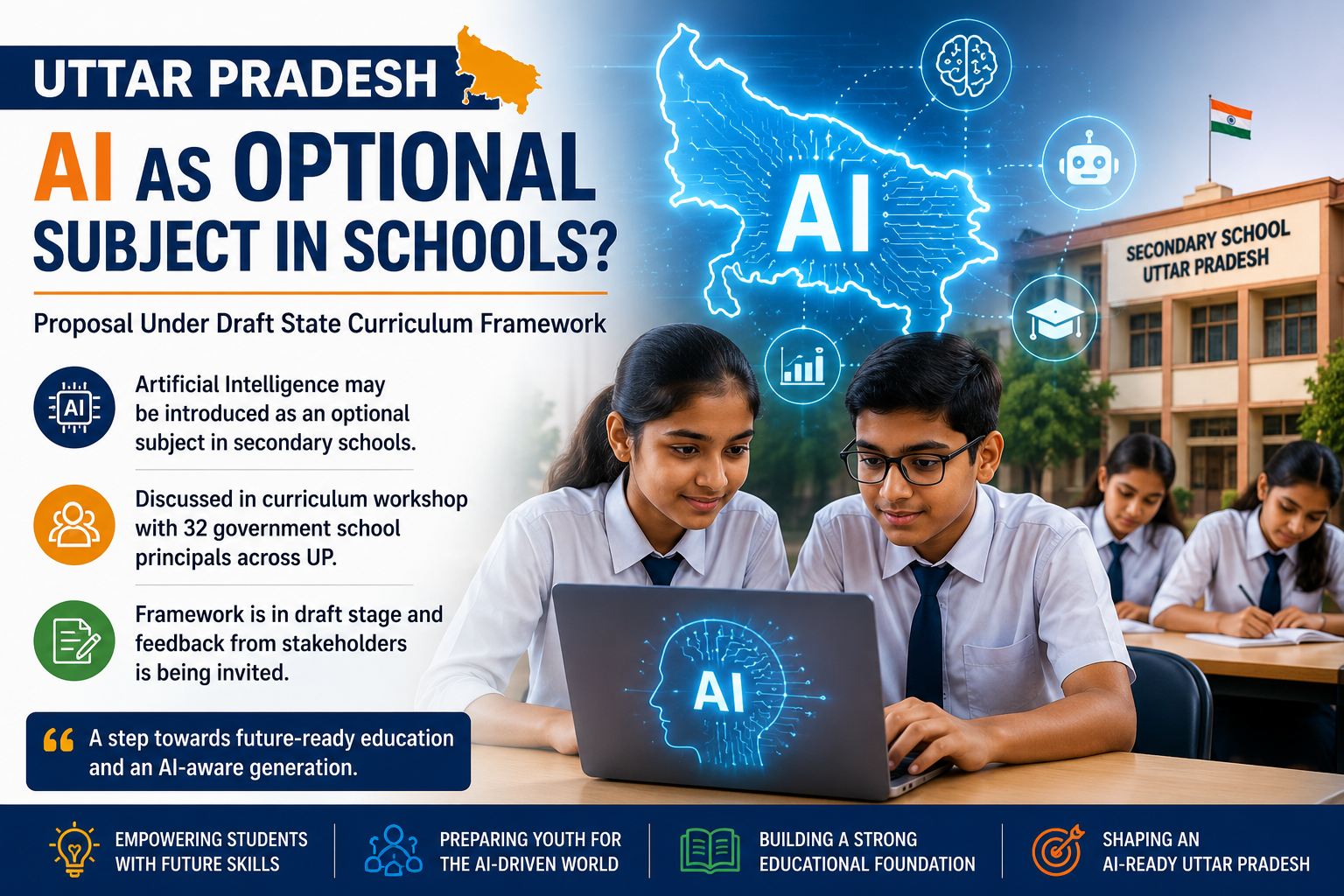
Uttar Pradesh is considering the introduction of Artificial Intelligence (AI) as an optional subject in secondary schools under a proposed new State Curriculum Framework. The proposal was discussed during the second phase of a curriculum development workshop organised by the Uttar Pradesh Secondary Education Council.
The workshop concluded on August 7, 2026 and brought together 32 government secondary school principals from different districts,
along with education officials. The discussions focused on learning objectives, competencies and the changing educational requirements of secondary school students.
However, the proposed AI subject has not yet been officially introduced in Uttar Pradesh schools. The State Curriculum Framework is currently in the draft stage and is being circulated among education officials and school representatives for feedback and suggestions.
AI Proposed as an Optional Subject
During the curriculum workshop, the Joint Director of Education, Lucknow, suggested that Artificial Intelligence could be considered as an optional subject for secondary school students.
The proposal comes at a time when Artificial Intelligence is becoming increasingly important across education, healthcare, agriculture, manufacturing, business, governance and other sectors.
If the proposal is approved, students could get an opportunity to learn the basic concepts and applications of Artificial Intelligence as part of their optional subjects. The exact structure and content of the subject, however, would depend on the final State Curriculum Framework.
State Curriculum Framework Still Under Development
The proposed AI subject is part of a larger effort to develop a separate secondary education framework for Uttar Pradesh.
The state is working on a curriculum framework that takes into account the specific educational requirements and local context of Uttar Pradesh’s secondary school students.
The draft framework has been circulated for consultation. Government school principals, district school inspectors, regional secretaries and joint directors of education have been invited to provide their comments and recommendations.
The feedback received during this consultation process will help shape the final framework before it is formally implemented.
Why AI Education Could Be Important for Students
Artificial Intelligence is rapidly becoming part of everyday life as well as professional environments. AI-powered technologies are now being explored and adopted across sectors such as education, healthcare, agriculture, finance, manufacturing and public administration.
Introducing AI education at the secondary school level could give students early exposure to an important emerging technology. It could also help them understand how AI works, where it is used and how it may influence future careers.
An optional AI subject could potentially introduce students to areas such as basic AI concepts, digital literacy, responsible use of AI,
problem-solving and emerging technologies.
The exact topics and learning outcomes will depend on the final curriculum if the proposal moves forward.
Focus on Skills Beyond Traditional Academics
The curriculum workshop also included discussions on areas beyond technology. Education officials and school representatives suggested that the new framework should address the wider development of students.
One of the suggestions focused on giving greater importance to the emotional development of students along with academic performance.
Another recommendation highlighted the importance of strengthening students’ communication abilities through facilities such as a language laboratory.
Participants also discussed the importance of helping students understand their surroundings, social environment and responsibilities towards society.
These discussions indicate that the proposed curriculum framework aims to take a broader approach towards secondary education by combining academic learning with technology, communication, emotional development and social awareness.
Preparing Uttar Pradesh Students for the AI Era
The growing adoption of Artificial Intelligence is changing the skills required across industries. Students with an understanding of digital technologies and AI may have better opportunities to adapt to future academic and professional environments.
For Uttar Pradesh, introducing AI as an optional subject could become part of a broader effort to develop a future-ready and digitally skilled generation.
Early exposure to AI can help students become familiar with emerging technologies before they enter higher education or the workforce. It may also encourage students to explore technology-related careers, innovation and entrepreneurship.
AI Proposal Is Still Under Consideration
It is important to note that the proposed AI subject is not yet a confirmed addition to the Uttar Pradesh school curriculum.
The State Curriculum Framework is still being developed, and the proposal is currently part of the consultation process. Feedback from education officials, school principals and other stakeholders will be considered before the framework is finalised.
Therefore, students and parents should currently view Artificial Intelligence as a proposed optional subject rather than a subject that has already been officially introduced across Uttar Pradesh schools.
A Potential Step Towards an AI-Ready Uttar Pradesh
If approved, the inclusion of Artificial Intelligence as an optional subject could mark an important development in Uttar Pradesh’s secondary education system.
The proposal comes at a time when AI literacy is becoming increasingly relevant for students, professionals and businesses. Providing structured exposure to AI at the school level could help young learners understand emerging technologies and prepare for changing career opportunities.
At the same time, the wider curriculum discussions show that Uttar Pradesh is looking beyond technology alone. Emotional development, communication skills, social awareness and the individual needs of students are also being considered.
The proposed State Curriculum Framework could therefore represent a broader shift towards future-ready, skill-oriented and student-focused education in Uttar Pradesh.
For now, the AI subject proposal remains under consideration. The next stage will depend on the feedback received during the consultation process and the finalisation of the State Curriculum Framework.