Uttar Pradesh Is Connecting Classrooms With Careers: A New Path for Secondary Students
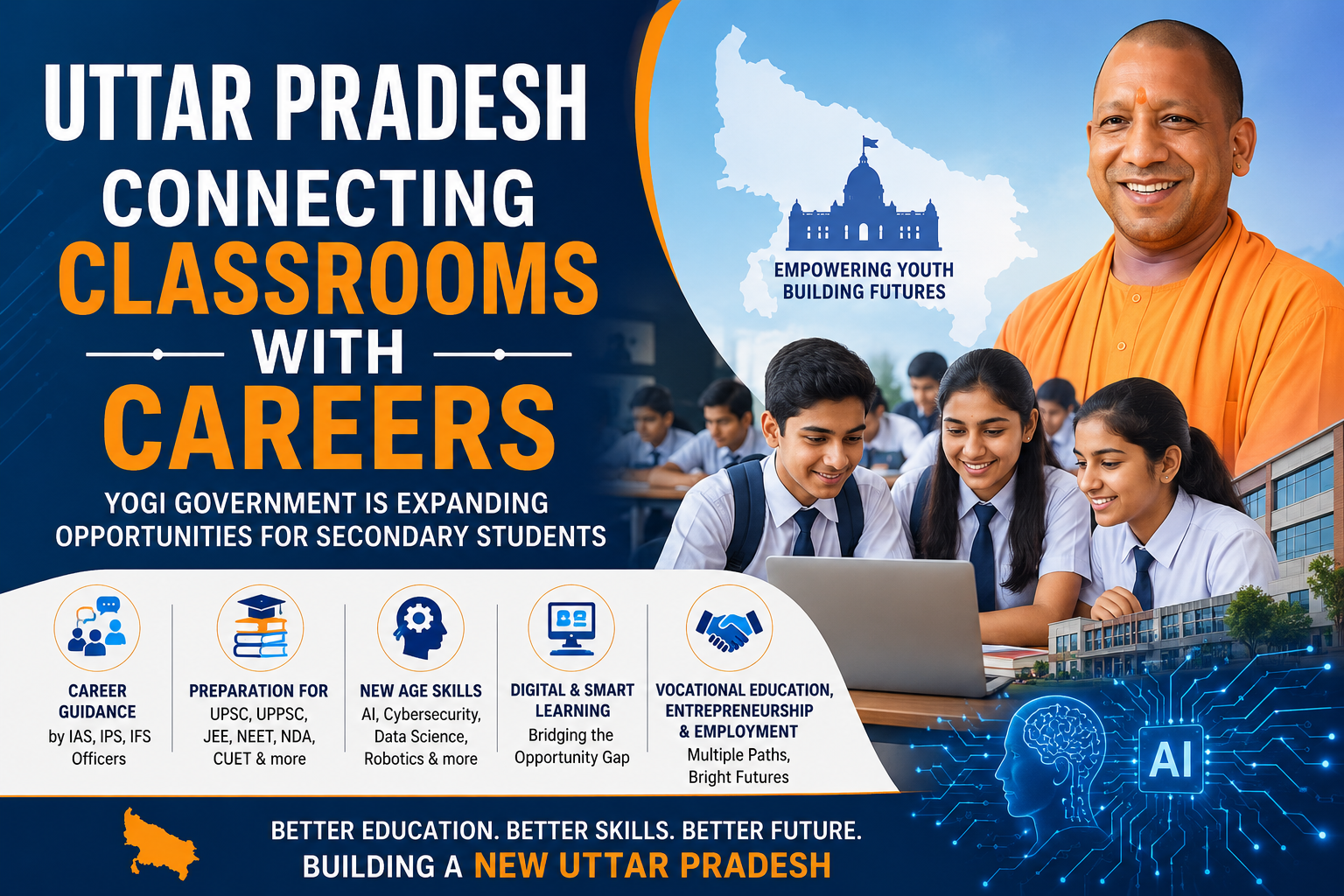
Education is no longer limited to textbooks, examinations and marks. For students in Classes 9 to 12, school is increasingly becoming the starting point for career planning, skill development and exposure to new opportunities.
The Uttar Pradesh government is placing greater emphasis on helping secondary and intermediate students understand what comes after school — whether that means higher education, competitive examinations, technical training, employment, entrepreneurship or careers in emerging technologies.
From School Lessons to Career Guidance
Classes 9 to 12 are a crucial stage in a student’s life. This is when young people begin choosing academic streams, identifying career interests and thinking about their professional future. To support students during this phase, the Uttar Pradesh government has introduced an initiative under which young IAS, IPS and IFS officers will visit intermediate-level schools and interact directly with
students.
Instead of traditional motivational lectures, these sessions are designed around conversations and question-and-answer interactions. Students can ask officers about competitive examinations, preparation strategies, time management, career choices and professional life.
Exposure to More Than Just Government Jobs
Career guidance under the initiative is not limited to civil services. Students can be introduced to multiple examination and career pathways, including:
- UPSC and UPPSC
- UPSSSC
- JEE and NEET
- NDA and defence careers
- CUET
- Technical and vocational education
- Employment opportunities
- Startups and entrepreneurship
The broader objective is to help students understand that there are multiple routes to building a zsuccessful career.
AI, Cybersecurity and the Digital Economy
The changing nature of the job market is also influencing what students need to learn. Artificial intelligence, data science, cybersecurity, robotics and other emerging technologies are rapidly changing workplaces. As a result, digital awareness and technology-related skills are becoming increasingly important for young learners.
Uttar Pradesh’s wider education initiatives are incorporating technology-enabled classrooms, ICT infrastructure and new-age courses. Technical institutions are also increasingly introducing areas such as machine learning, data science, Internet of Things, cybersecurity and drone technology. For students, this means career planning can begin much earlier than it did traditionally.
Building Skills Alongside Academic Knowledge
Academic performance remains important, but today’s students need a wider set of abilities.
Students can benefit from developing skills such as:
- Communication skills
- Financial literacy
- Cybersecurity awareness
- Confidence building
- Self-discipline
- Stress management
- Business management
- Entrepreneurship
These skills can help students become better prepared not only for examinations but also for college,
employment and professional life.
Vocational Education Opens Another Path
Not every student wants to follow the conventional school-college-job route. Uttar Pradesh is also strengthening vocational education for students in Classes 9 to 12 through initiatives designed to introduce practical and industry-relevant skills. Such programmes can help students explore employment, entrepreneurship and technical education while they are still in school.
Digital Learning Can Reduce the Opportunity Gap
Access to technology has the potential to make education more inclusive. Digital learning resources, smart classrooms and ICT facilities can give students in smaller towns and rural areas access to educational material, career information and learning opportunities that were
previously concentrated in larger cities. For Uttar Pradesh, with its large and diverse student population, expanding digital access can play an
important role in creating more equal educational opportunities.
Scholarships and Financial Support Matter Too
Career opportunities are meaningful only when students are able to continue their education. Scholarships and financial assistance programmes can help reduce the economic pressure on families and encourage students to continue their studies after secondary school. Support for students from rural, economically weaker and other disadvantaged backgrounds can make the
transition from school to higher education more accessible.
The Bigger Picture
The direction of Uttar Pradesh’s education strategy is becoming increasingly clear school education is being connected with career development. The focus is expanding from simply helping students pass examinations to helping them understand opportunities, develop practical skills, access technology and make informed decisions about their future. The initiative to bring young civil servants directly into schools adds another important dimension — mentorship. When students can directly interact with professionals who have successfully navigated competitive examinations and demanding careers, they get something that textbooks cannot provide: a real-world
perspective.
What This Means for Students
For a Class 9 student today, the future career journey could include university education, competitive examinations, technical training, AI and technology, vocational skills, entrepreneurship or employment. The important change is that students are being encouraged to explore these possibilities earlier. The classroom is no longer just a place to prepare for the next examination. It can become the first step towards preparing for the future. As Uttar Pradesh continues expanding career counselling, digital education, vocational training, technology exposure and mentorship, the goal is moving towards creating students who are not only academically prepared but also career-ready, digitally aware and confident enough to pursue new opportunities.